
Leading through time: how human–AI collaboration can reshape innovation in teams

Dr Guy Bate
Thematic Lead in Artificial Intelligence and
Professional Teaching Fellow in Strategy and Innovation
University of Auckland Business School
In many organisations, innovation is still treated as an extra, something to be scheduled once the “real” work is complete. Yet the most effective leaders are finding that innovation doesn’t need separate time; it needs different kinds of time.
From the recent work of Raghu Garud, Marja Turunen, and Arvind Karunakaran (2025), innovation can be understood through a temporal structuring lens that draws on design and narrative theory. This perspective highlights three interwoven forms of time — Chronos for structure and rhythm, Kairos for moments of opportunity, and Aion for continuity and learning — revealing how innovation is sustained within the ordinary flow of work.
As teams begin to work alongside generative AI (GenAI), these forms of time might take on new significance. AI can automate rhythm, surface opportunity, and preserve learning, but only if leaders use it collaboratively, not mechanically. Managing innovation in the age of AI is therefore as much about leading time as it is about leading people.
Chronos: structure that frees thinking
Chronos is the time of structure and predictability, the calendars, reports, and cycles that keep work on track. These routines provide stability, but they can also crowd out curiosity.
AI can help stabilise operations so human attention can move from administration to sensemaking. Instead of manually compiling updates, a manager might use AI to generate concise pre-reads or summaries that highlight anomalies and emerging risks. Discussion can then start at the level of insight, not data gathering.
In this way, structure becomes a platform for reflection. The leader’s task is to protect the rhythm while repurposing attention toward learning.
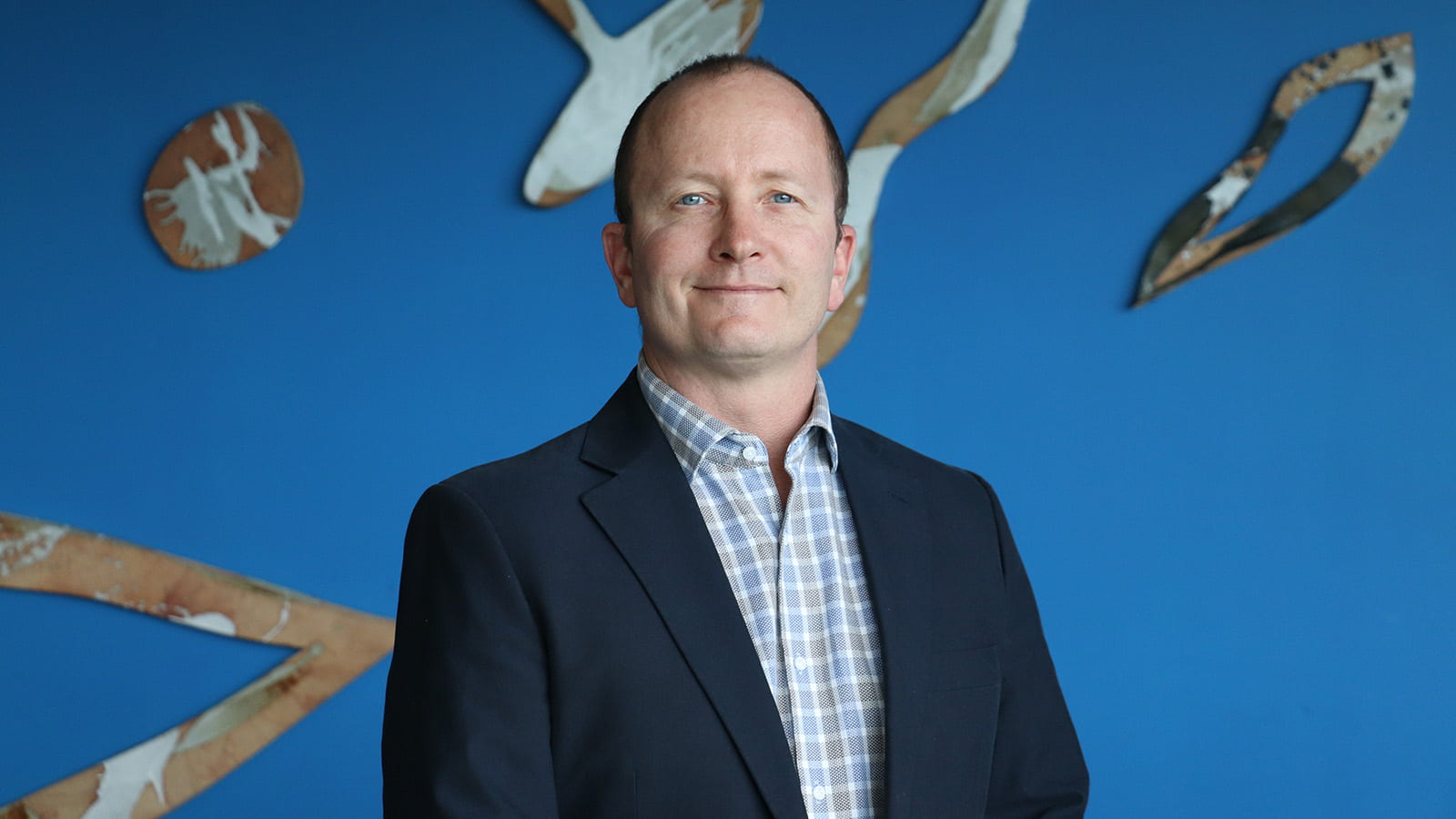
Dr Guy Bate is the Thematic Lead in Artificial Intelligence at the Business School.
Kairos: recognising moments that matter
Kairos is the time of opportunity, the instant when something unexpected reveals potential. It might be a client comment that doesn’t fit the usual pattern or a surprising data trend.
AI can extend a team’s ability to notice such signals. It can scan notes, transcripts, or dashboards to reveal repeated questions or emerging tensions that might otherwise pass unnoticed. During planning or problem-solving sessions, leaders can use AI to generate alternative framings such as What if we viewed this from the customer’s perspective? or How would this look if our priorities changed?
These small experiments invite exploration without derailing delivery. The leader’s role is to model curiosity, showing that early, imperfect ideas are welcome and valuable.
Aion: keeping learning alive
Aion is the time of continuity, the long arc that connects what was learned yesterday to what will be needed tomorrow. It prevents teams from solving the same problem twice.
AI can support this by acting as a curator of organisational memory. After a project concludes, AI can help distil key lessons and examples into short, reusable narratives that others can adapt. Leaders then ensure these insights are shared and revisited, turning activity into capability.
In doing so, Aion time converts experience into momentum. AI maintains the thread, and leadership gives it meaning.
Leading across the three times
Working productively with AI calls for three forms of stewardship:
- Temporal stewardship: designing when human and AI inputs occur, automation during Chronos, augmentation during Kairos, and synthesis during Aion.
- Epistemic stewardship: guiding how meaning is made, treating AI outputs as hypotheses, not conclusions.
- Ethical stewardship: ensuring that AI use aligns with the organisation’s values and with the trust of colleagues and clients.
Leadership becomes an act of orchestration rather than control, balancing efficiency, exploration, and reflection across different temporal layers of work.
From doing more to seeing differently
The opportunity of human–AI collaboration lies less in speed than in perspective. Teams that use AI well don’t just do tasks faster; they see their work differently. They detect weak signals earlier, question assumptions more deeply, and turn everyday routines into opportunities for renewal.
This doesn’t require new meetings or extra hours. It asks leaders to reshape the time they already have, to embed innovation within the natural cadence of delivery.
When AI is used intentionally across Chronos, Kairos, and Aion, innovation becomes not an interruption to work but a rhythm within it. The result is a team culture where people don’t just keep pace with change; they learn to work with time itself.
Takeaways for senior managers
- Let AI stabilise your routines: Automate preparation and documentation so people can focus on insight.
- Stay alert to opportunity: Use AI to surface emerging signals but keep human judgment at the centre.
- Build shared memory: Capture and curate learnings so experience compounds over time.
- Model discernment: Show how you interpret and test AI outputs rather than accepting them at face value.
- Lead through rhythm: Innovation thrives not in isolated sprints but in the cadence of everyday work.
The leaders who will thrive in the next wave of change are those who learn to work with time, not against it. By using AI to steady the rhythm, expand awareness, and sustain learning, managers can turn the ordinary flow of delivery into a living cycle of innovation. The question is no longer how to find time for innovation, but how to lead time so that innovation finds you.
Reference
Garud, R., Turunen, M., & Karunakaran, A. (2025). Revisiting exploration and exploitation: Temporal structuring for innovation at work. Organization Theory, 6, 1–24. https://doi.org/10.1177/26317877251346798
